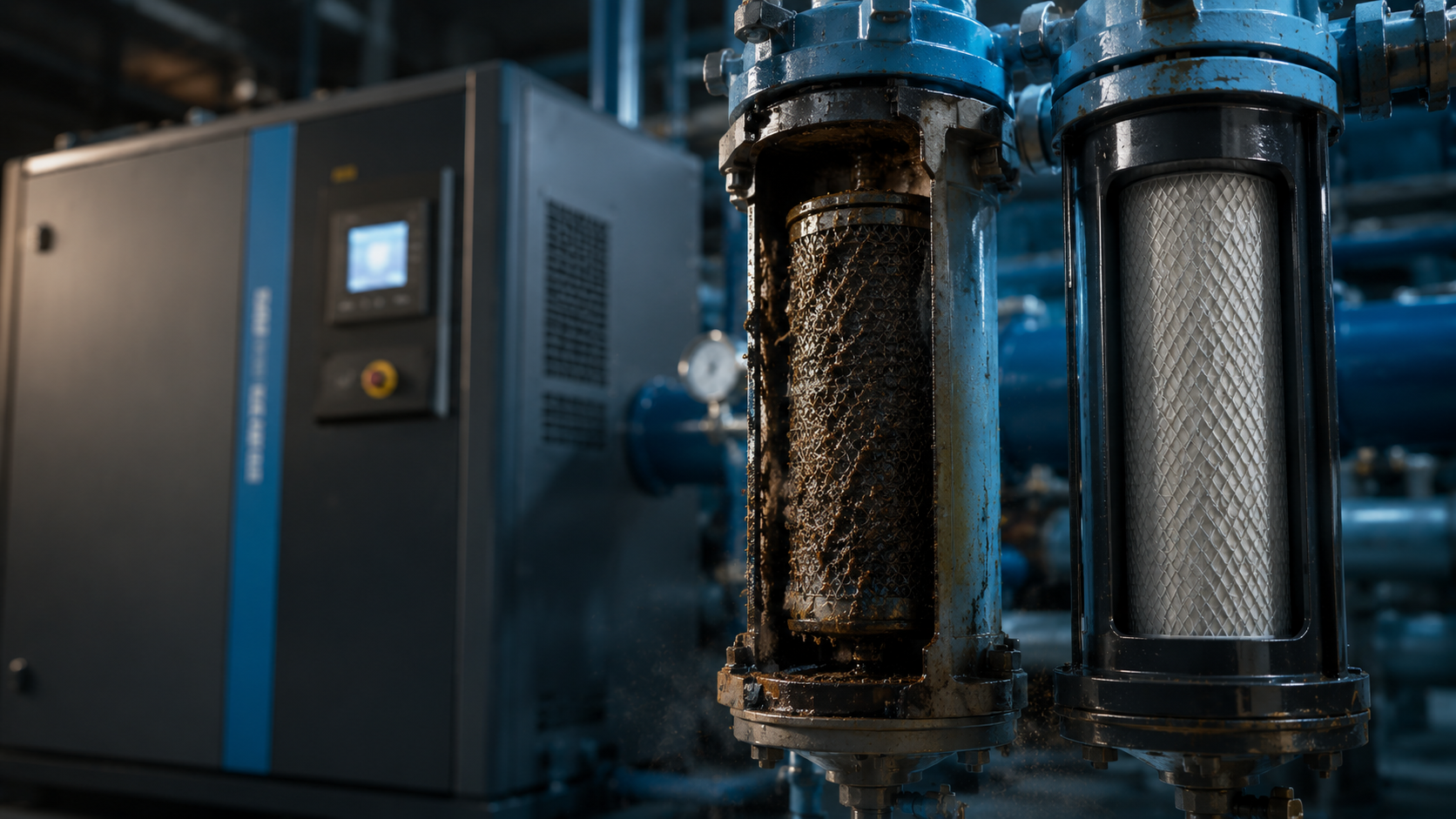

Why Does Pressure Drop Occur in a Compressed Air System?
Compressed air systems are one of the main energy sources in industrial facilities. However, one of the most common hidden problems in many enterprises is pressure drop.
Pressure drop increases energy consumption, reduces equipment performance, and may even lead to production downtime. But why does this problem occur, and how can it be prevented?
What is Pressure Drop?
Pressure drop is the loss of pressure that occurs as compressed air moves through the system.
For example, if the compressor outlet pressure is 8 bar, but the pressure at the point of use falls to 6.5–7 bar, this indicates a pressure loss within the system.
The greater the difference:
- the higher the energy consumption,
- the lower the equipment efficiency,
- the more unstable the production process becomes,
- and the harder the compressor has to work.
Main Causes of Pressure Drop
1. Dirty Filters
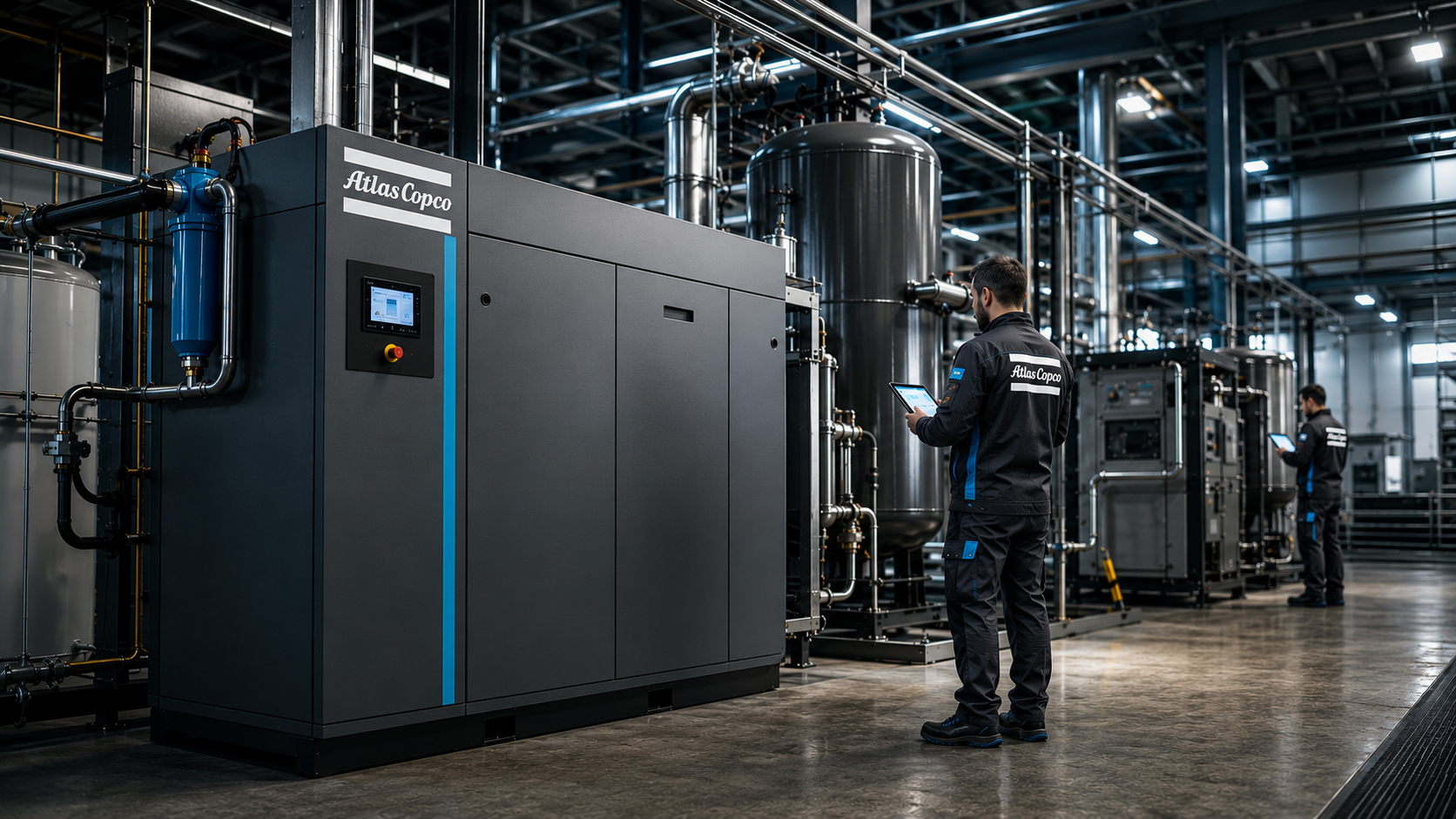
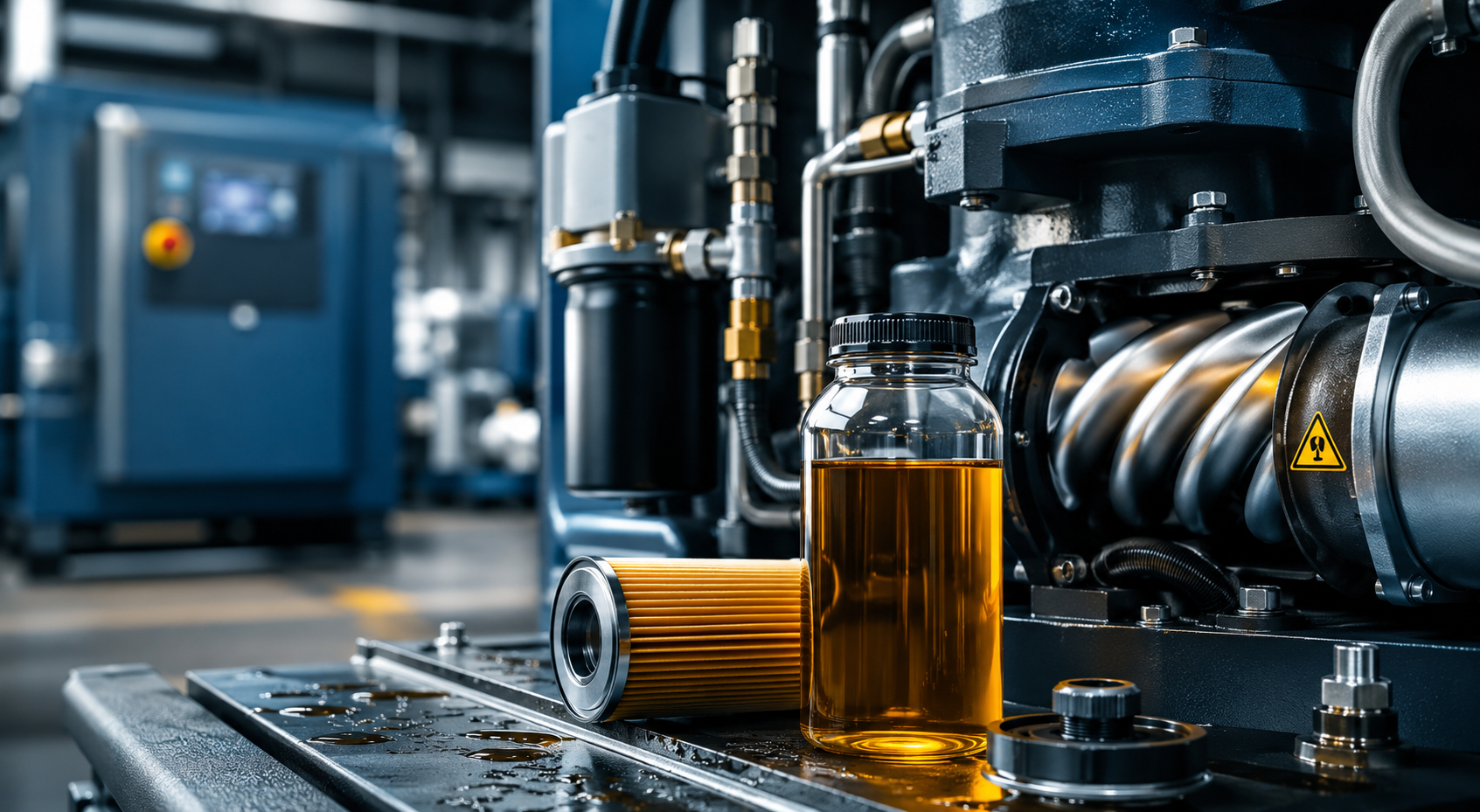
Filters used in compressed air systems gradually become clogged with:
- dust,
- oil particles,
- moisture,
- and other contaminants.
This restricts airflow and creates additional resistance within the system. As a result, the compressor must work harder to maintain pressure.
2. Incorrect Pipe Sizing
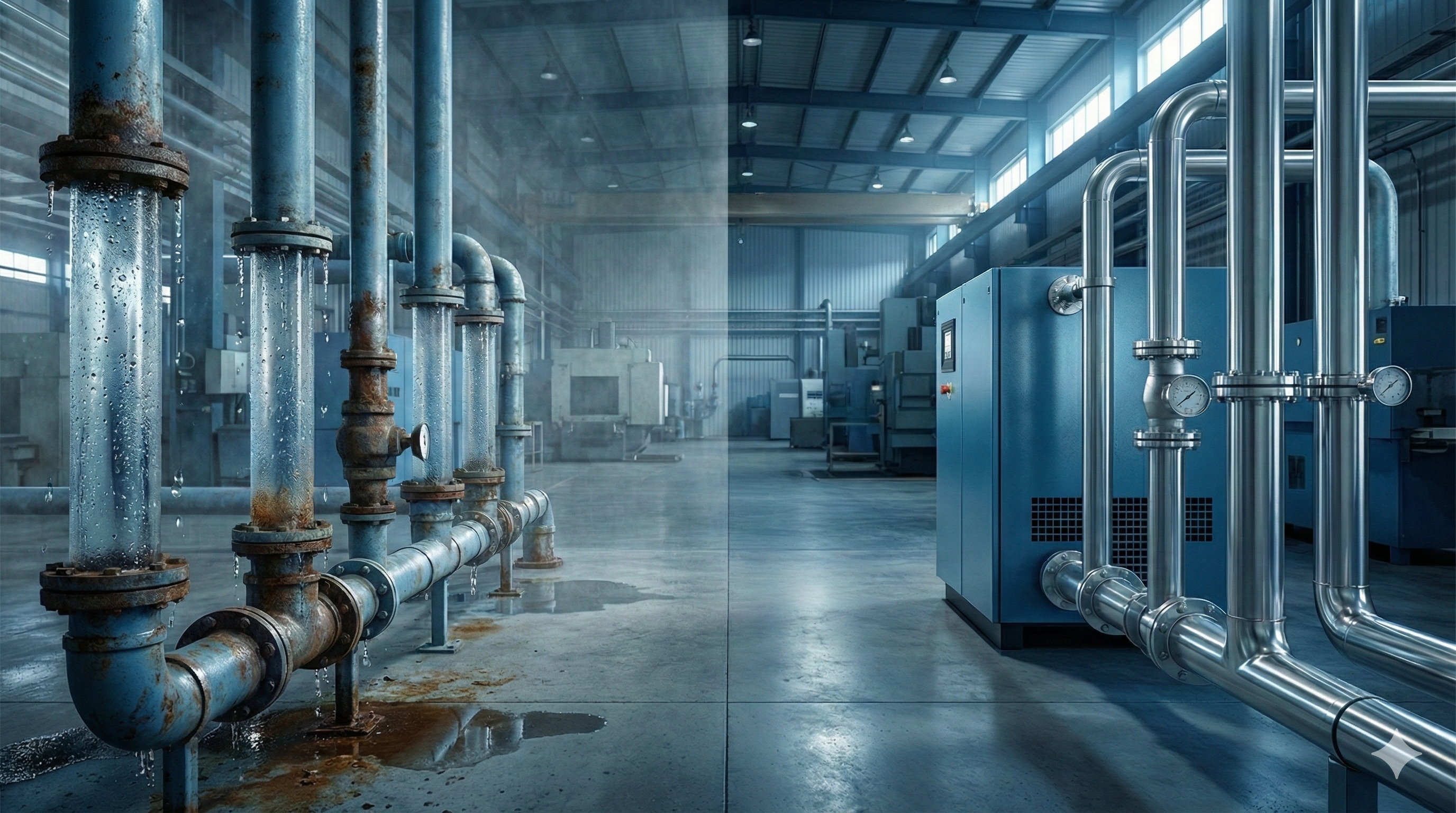
Narrow or excessively long pipelines restrict airflow.
If the piping system is not designed according to the required air demand:
- air velocity increases,
- internal friction rises,
- pressure loss occurs.
Older or corroded pipelines can make this issue even worse.
3. Air Leaks
One of the most common industrial problems is air leakage.
Even a small leak can cause:
- compressors to run longer,
- higher energy consumption,
- lower system pressure.
Studies show that in some facilities, up to 20–30% of compressed air is lost due to leaks alone.
4. Improper Filtration System
Using unsuitable or low-quality filtration systems can:
- restrict air passage,
- create unnecessary resistance in the system.
In some cases, an incorrectly selected filtration setup causes the compressor to operate under unnecessary load.
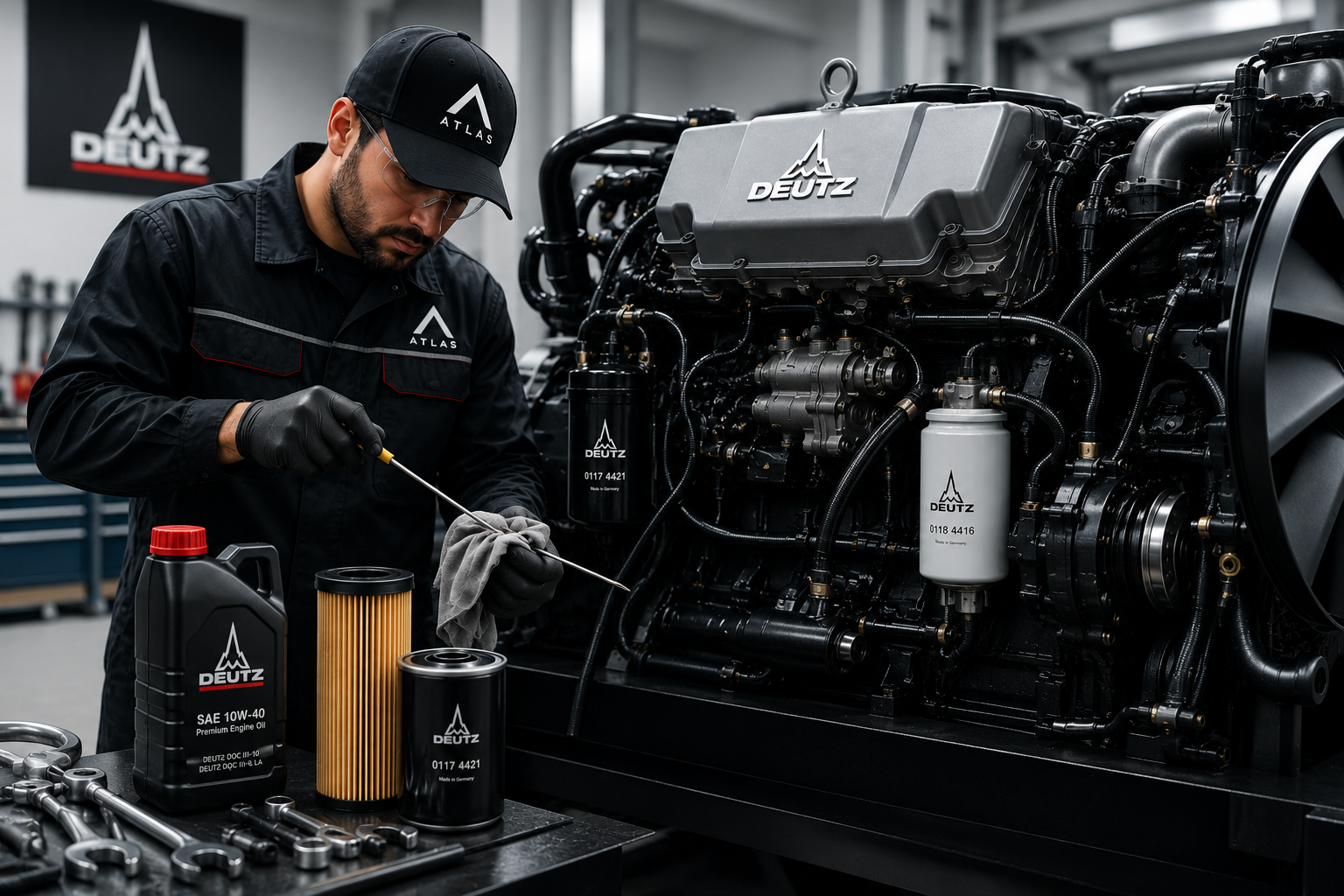
5. Delayed Maintenance
Without regular maintenance:
- separators,
- filters,
- dryers,
- and pipe connections
lose their efficiency over time.
This not only increases pressure drop but also shortens equipment lifespan.
How Pressure Drop Affects Industrial Operations
Pressure loss is not only a technical issue — it is also a financial problem.
Pressure drop can lead to:
- higher electricity costs,
- production downtime,
- poor pneumatic equipment performance,
- fluctuations in product quality,
- premature compressor wear and failure.
Even an additional 1 bar pressure requirement can significantly increase energy consumption.
How to Prevent Pressure Drop
Effective solutions:
- Replace filters on time
- Regularly inspect the system for air leaks
- Use correctly sized piping systems
- Choose high-quality filtration and air treatment solutions
- Perform periodic system maintenance
- Invest in energy-efficient compressor technologies
Conclusion
At first glance, pressure drop in compressed air systems may seem like a minor issue, but over time it can result in serious energy and financial losses for industrial businesses.
A properly designed and regularly maintained system:
- operates more efficiently,
- reduces energy consumption,
- extends equipment lifespan,
- and improves overall production reliability.
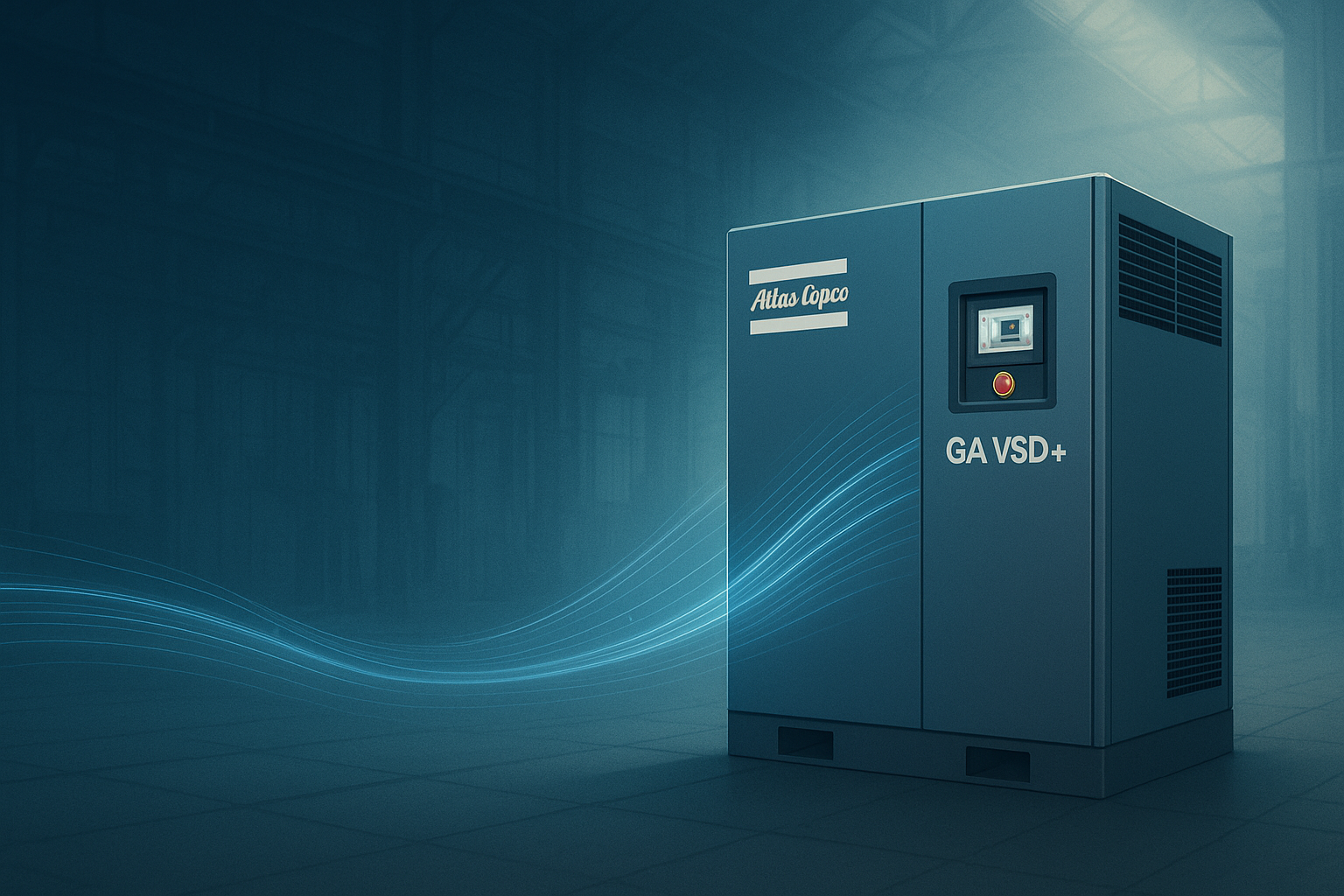
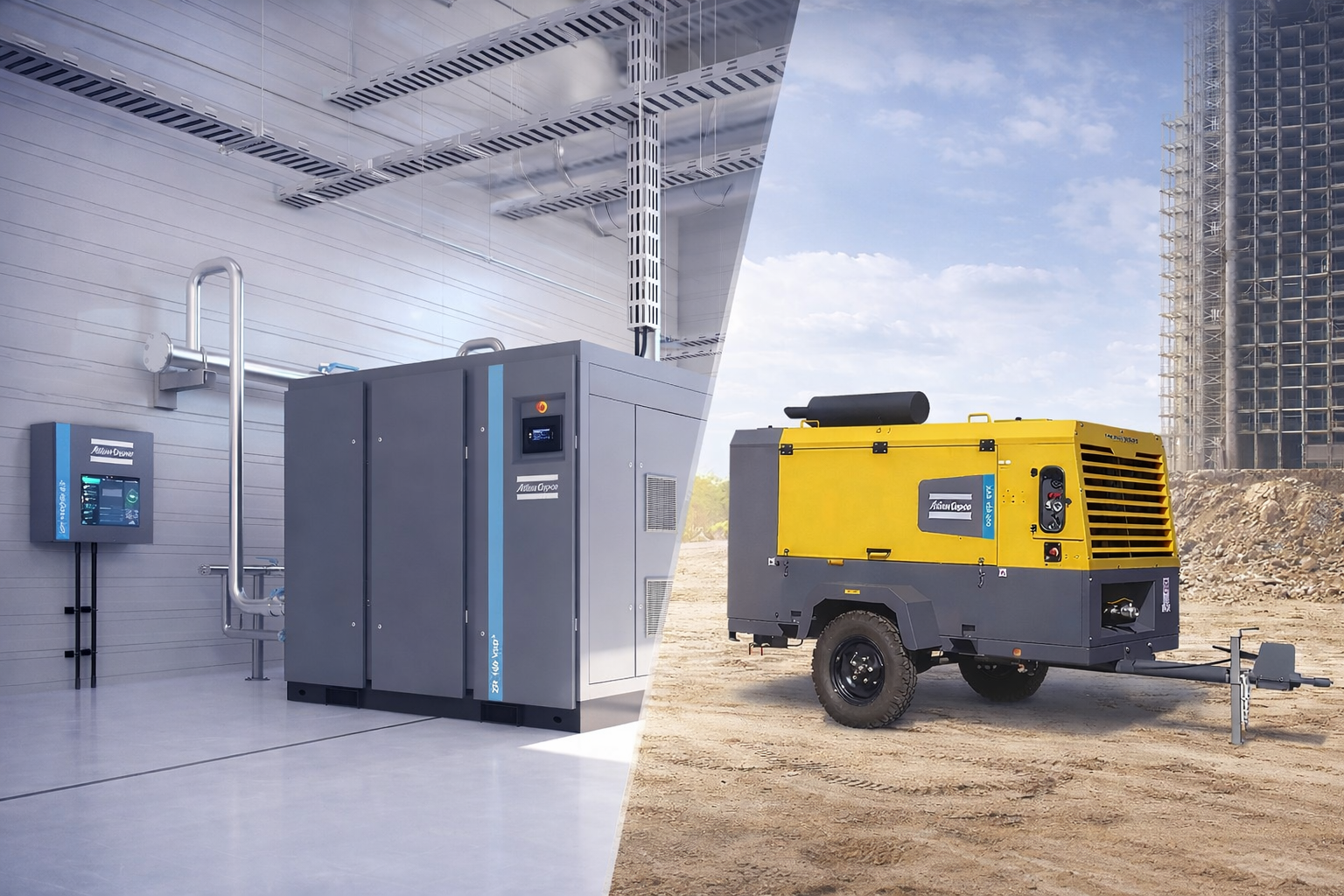
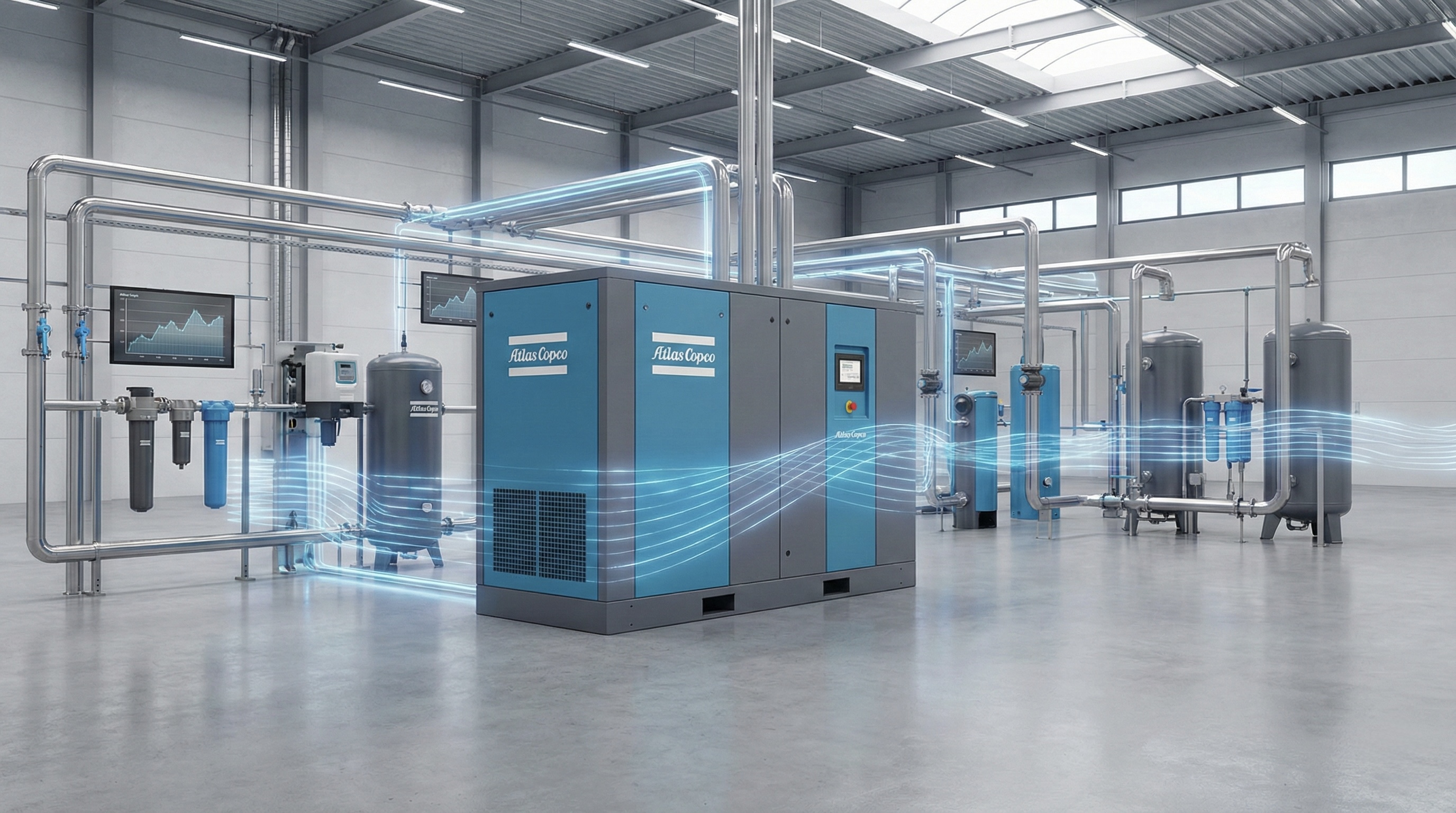
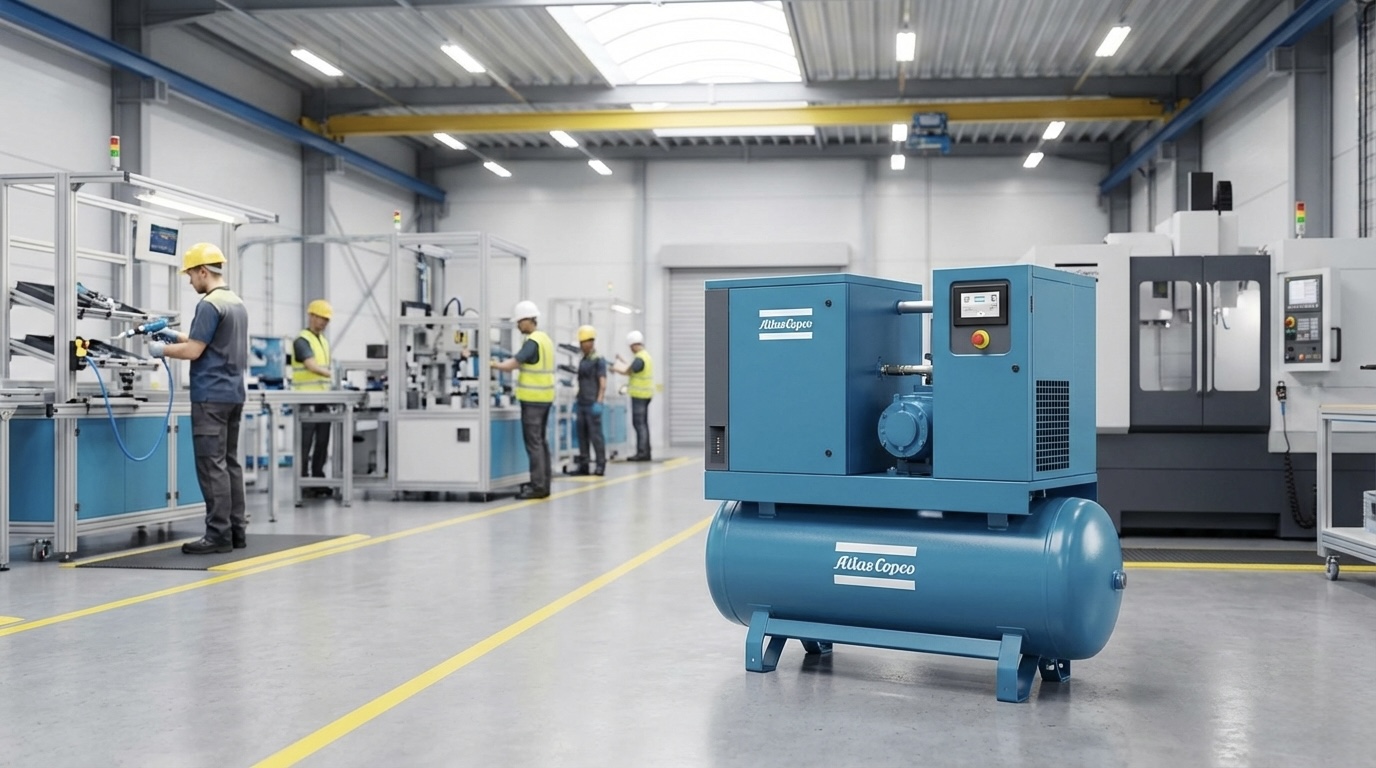
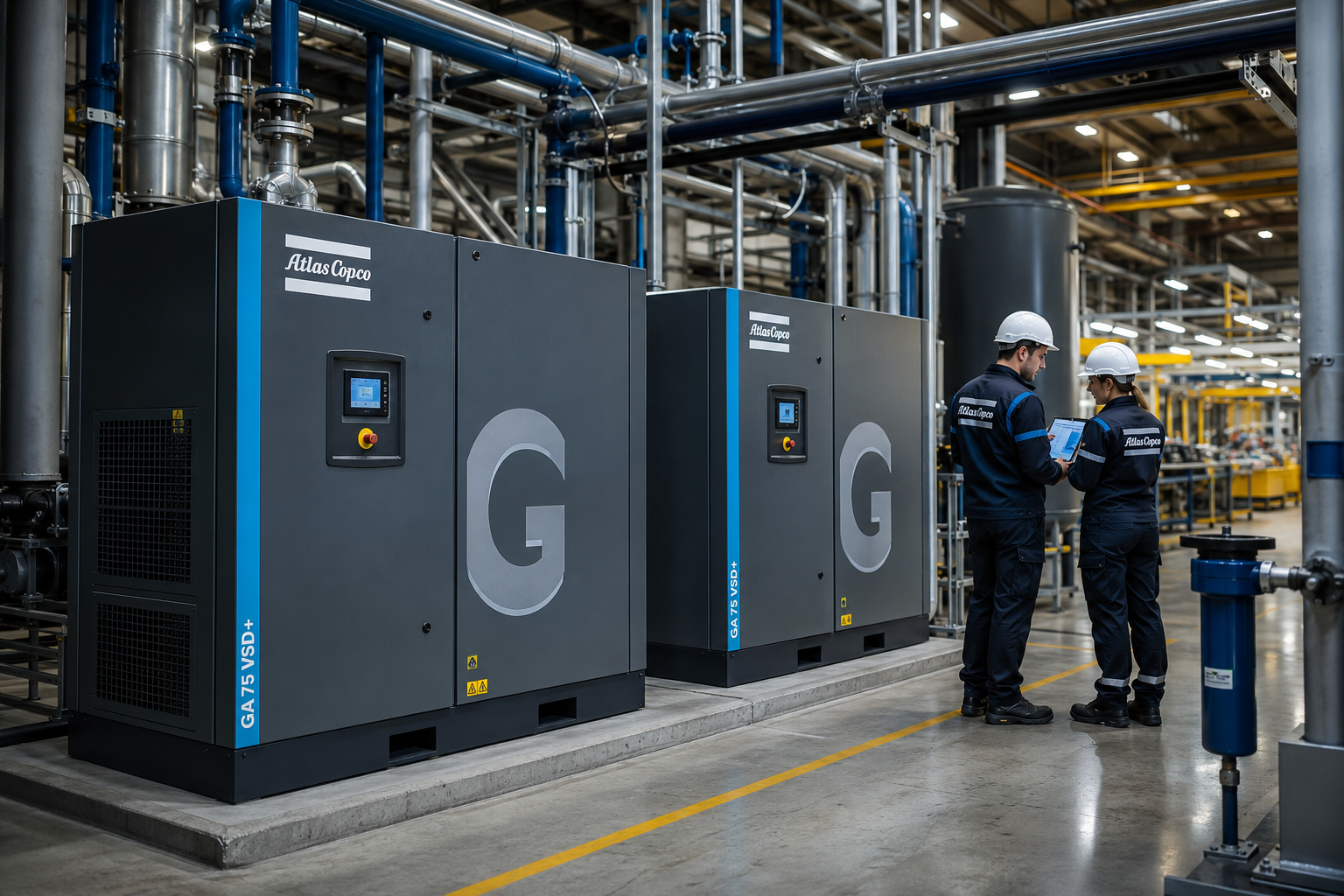
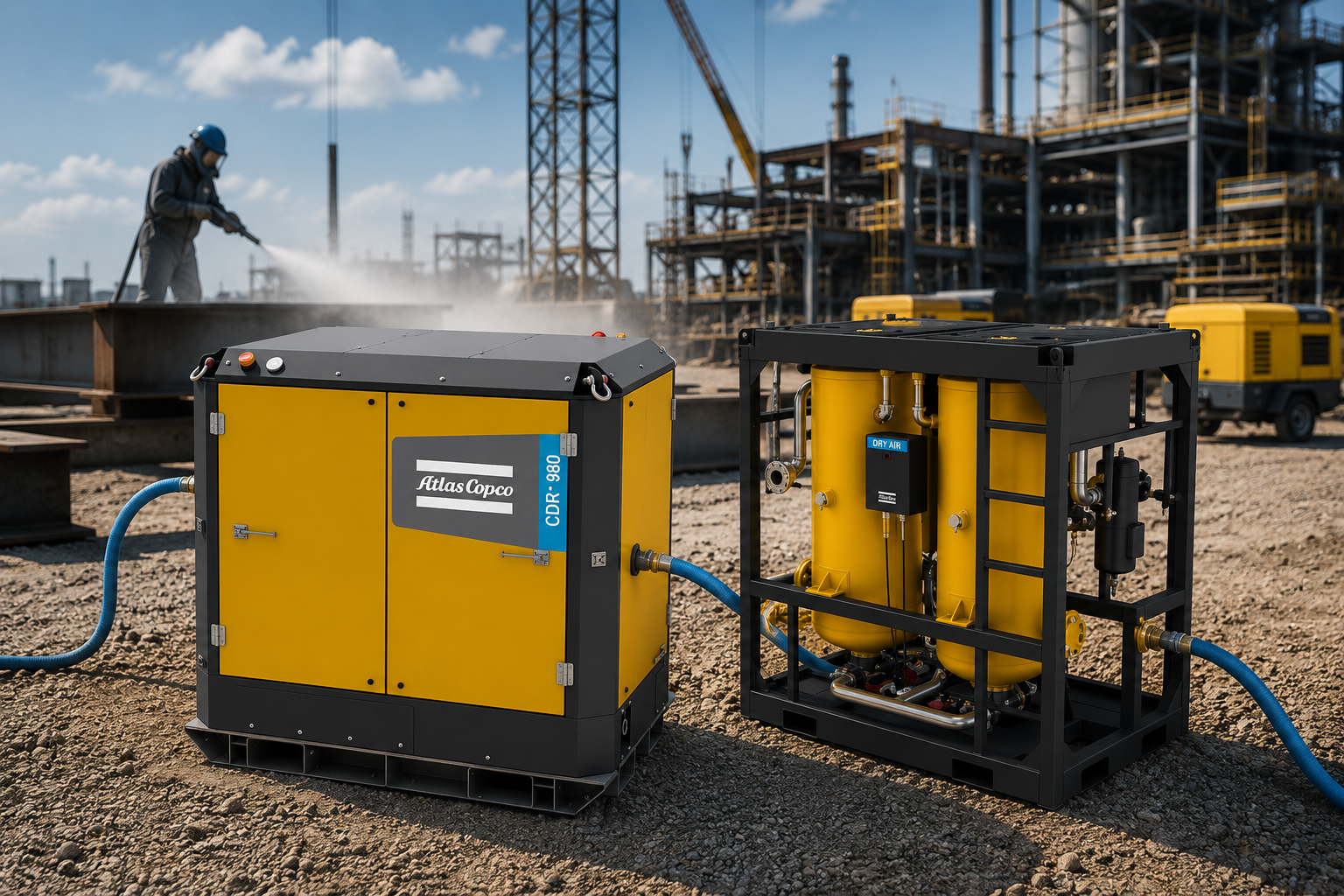
As Atlas, we provide energy-efficient and reliable compressed air solutions for industrial facilities.