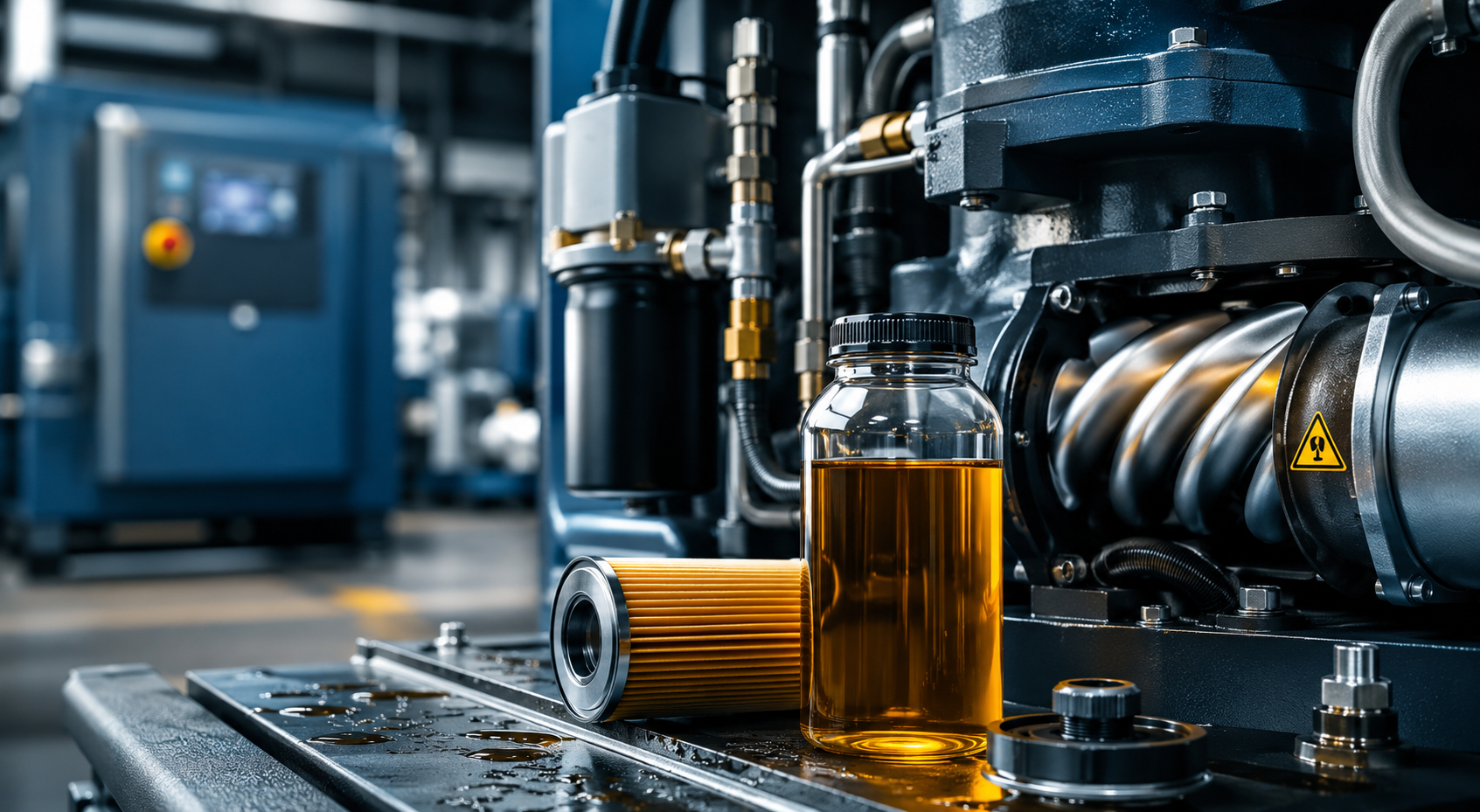

Why is the quality of the compressor oil necessary and how often should it be changed ?
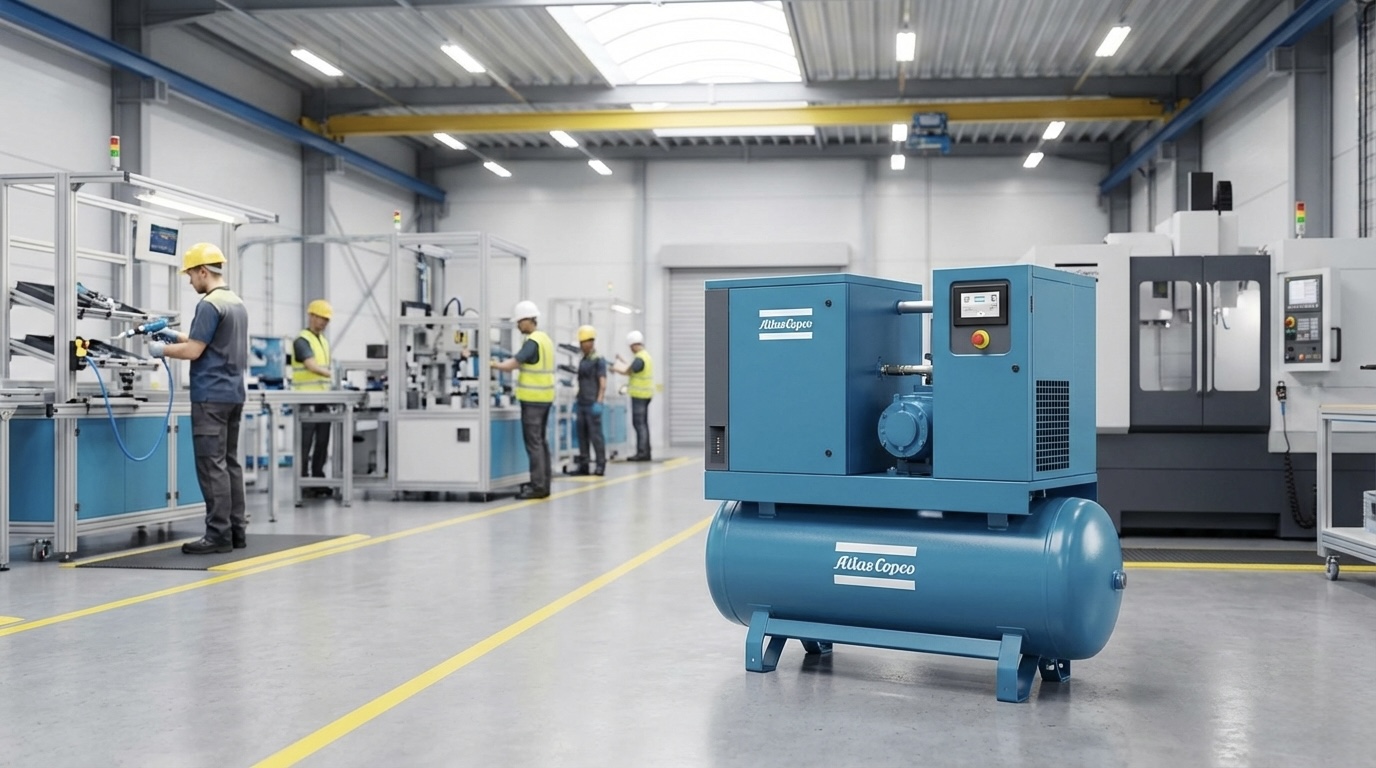
Compressors are one of the main equipments for uninterrupted and stable air supply in industrial enterprises. Long-lasting, safe and efficient operation of the compressor is possible only with proper maintenance. One of the most important parts of this maintenance is the quality of the compressor oil and its timely replacement.
Many users put off changing the oil as long as the compressor is running. However, poor quality or expired oil can seriously damage the compressor's internal components, reduce performance, and increase service costs.
Why is compressor oil important?
Compressor oil does more than just lubricate. It plays an important role in protecting the compressor's main mechanisms. Especially in screw compressors, oil not only reduces friction but also helps the system cool and run cleanly.
Quality compressor oil:
• reduces friction between internal parts;
• protects the screw group and motor parts;
• helps remove heat from the system;
• ensures more stable operation of the compressor;
• minimizes the risk of wear and tear and failure;
• extends the service life of the equipment.
For this reason, it is important that the oil used for the compressor is an original product, with the appropriate specifications and based on the manufacturer's recommendations.
How does poor quality oil damage the compressor?
Poor quality compressor oil or the use of unsuitable oil can cause serious technical problems. These problems may not be noticeable at first. However, over time, the equipment will experience overheating, noise, loss of performance, and wear of parts.
The main risks posed by poor quality oil:
1. Screw group wear:
When lubrication is not done properly, friction in the screw group increases. This can lead to the failure of one of the most critical and expensive parts of the compressor.
2. High temperature problem
Compressor oil also plays a role in the cooling process. If the oil is of poor quality, heat is not properly removed from the system and the compressor can overheat.
3. Deposits and contamination in the oil system
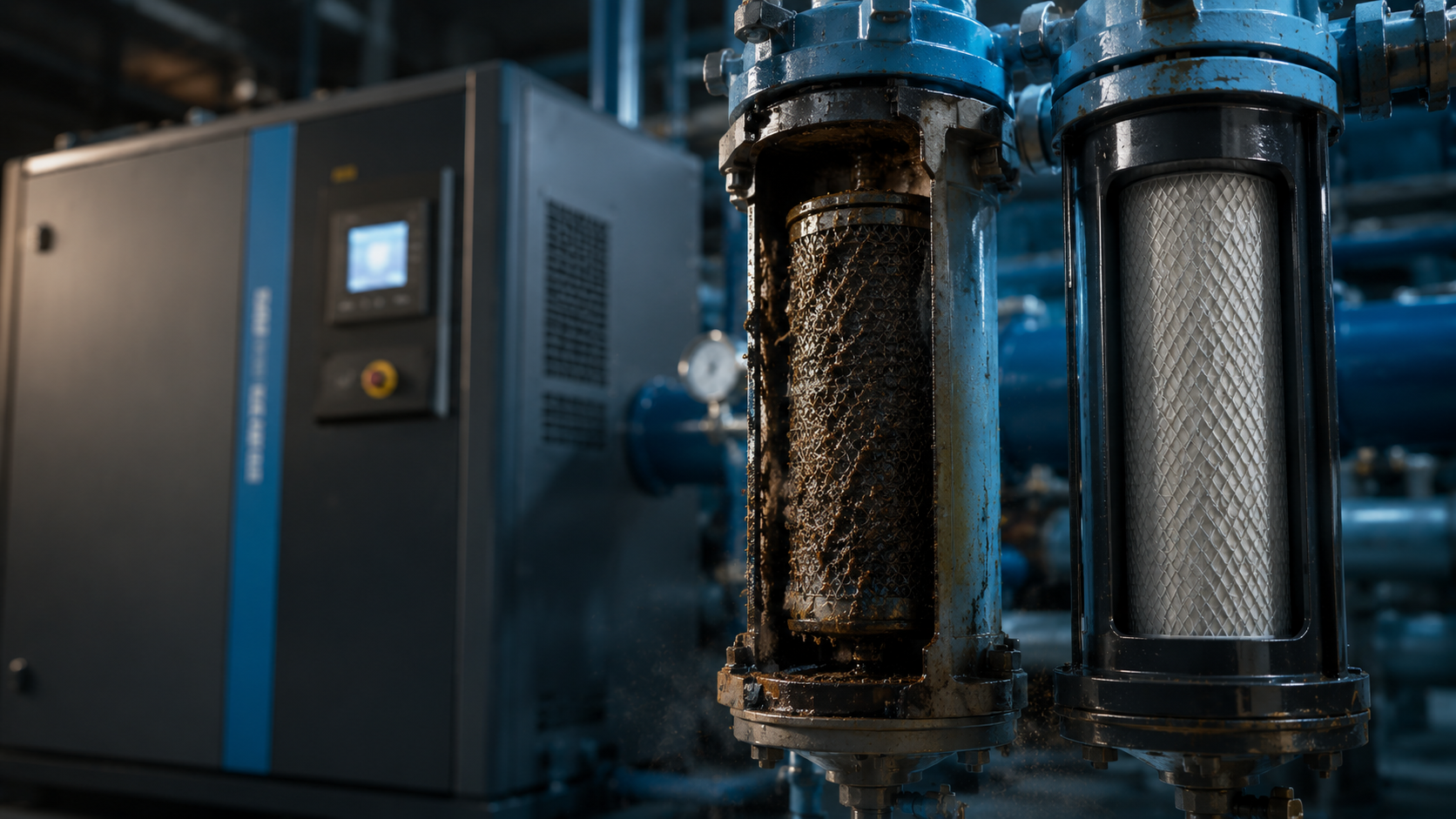
Incompatible oil can cause deposits to form within the system over time. These deposits cause blockages in the oil filter, radiator, and internal passages.
4. Increased energy consumption
As internal resistance and friction increase, the compressor uses more energy to do the same job. This directly affects the company's electricity costs.
5. Risk of unplanned downtime
If oil problems are not detected in time, the compressor can suddenly stop. This means interruption in the production process, additional service costs and loss of time.
When should compressor oil be changed?
The compressor oil change interval depends on the equipment model, operating hours, operating conditions, and the type of oil used. In general, oil changes should be performed according to the manufacturer's technical instructions.
Usually the compressor oil should be changed in the following cases:
• when the service hour is completed;
• when the color of the oil darkens and its quality changes;
• when there is a problem with the compressor overheating;
• during oil filter and separator replacement;
• when contamination or sediment is detected in the system;
• if the compressor operates under severe conditions and in continuous mode;
• if it is determined during a technical inspection that the oil has lost its properties.
The important point is that oil changes should be carried out according to a preventive service plan, not just "when the compressor is stopped".
What problems does not changing the oil on time cause?
Changing compressor oil late may seem like a cost-saving measure at first glance, but in reality, this approach can lead to higher repair costs.
As a result of not changing the oil on time:
• compressor efficiency decreases;
• internal parts wear out more quickly;
• increased contamination in the radiator and filter system;
• the cooling and protective ability of the oil weakens;
• the screw group, bearings and other critical parts are at risk;
• the probability of equipment failure increases.
For this reason, compressor oil should not be treated as a simple part of maintenance, but as a key factor in maintaining the life of the equipment.
Why is it important to use genuine compressor oil ?
Each compressor has different technical requirements. Therefore, not every industrial oil can be considered suitable for a compressor. Original and manufacturer-recommended oils are formulated to suit the compressor's operating conditions, temperature, and technical specifications.
Advantages of using original compressor oil:
• ensures stable and safe operation of the compressor;
• helps maintain proper service intervals;
• reduces wear of internal parts;
• enables more efficient operation of the oil filter and separator;
• supports the longevity of equipment;
• reduces risks in warranty and maintenance processes.
Even if using an unsuitable oil does not cause problems in the short term, it can cause serious problems in long-term operation.
What should be paid attention to when changing compressor oil ?
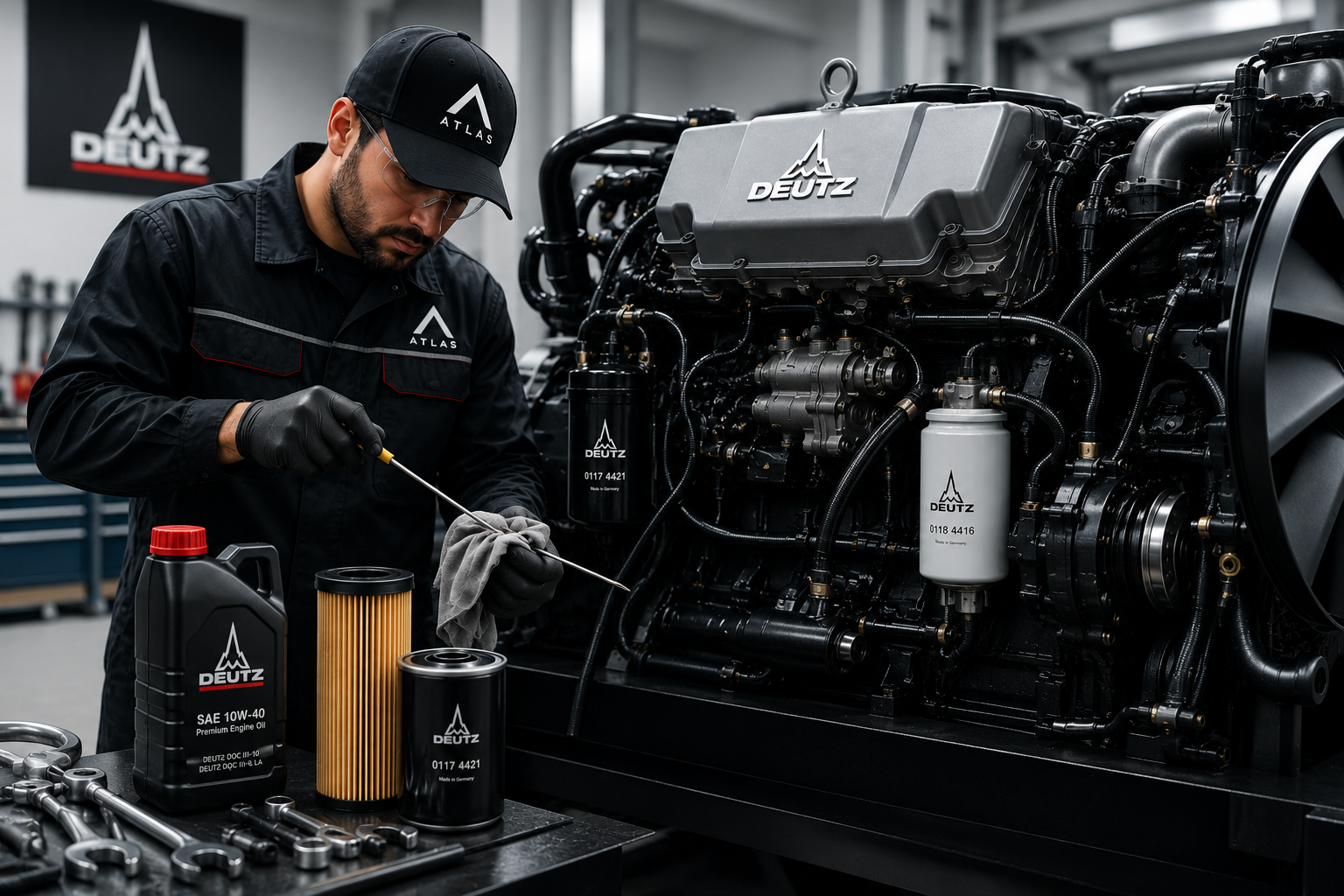
An oil change is not just about draining the old oil and adding new. Proper servicing should include a thorough inspection of the system and an assessment of the risks of contamination and failure.
Key points to pay attention to when changing the oil:
• old oil must be completely drained;
• the oil filter should be checked and replaced if necessary;
• the condition of the separator should be assessed;
• the radiator and cooling system must be clean;
• leakage and temperature indicators should be checked;
• only suitable and high-quality compressor oil should be used;
• After the change, the compressor must be operated in test mode.
Professional maintenance ensures the compressor operates safely and efficiently by performing each of these steps correctly.
Conclusion
The quality of compressor oil directly affects the performance, energy consumption, maintenance costs and overall service life of the equipment. Poor quality or outdated oil can cause the internal parts of the compressor to wear out faster than they should.
Therefore, it is important for every business to change compressor oil on time, use genuine products, and follow a preventive service plan.
If you need professional service to ensure the long-lasting and stable operation of your compressor, Atlas experts are at your service with diagnostics, oil changes, filter checks, and full maintenance services.
Professional service at one address — Atlas.